Important Announcement
Implementing a net-zero by 2050 plan entails a significant transition
This ambitious goal will have profound economic consequences for everyone, especially younger Canadians. Here's a closer look at the raw costs of such a transition, focusing on the known economic impacts.

How much?
The Canadian Federal Government, in its 2022 Budget, outlined the financial commitments needed to achieve Net Zero emissions by 2050. The estimated expenditures totaled approximately $3.9 trillion over 28 years or 9.4x the total federal tax revenue for 2022. There were 15.3 million Canadian households paying an average of $48,199 in tax. To spend the $254,901 per household would require allocating 33% of 2022's revenue, which being unfeasible, had actual spending closer to 6% thus further amplifying future requirements. The current spending still would equate to 2x the total 2022 tax revenue over those same 28 years. Let's be clear, this issue is diverting a lot of resources from the top concerns like health care, education and infrastructure.
Housing and Living Costs
The noble quest for a greener future means energy efficiency requirements for both new and existing buildings becoming more stringent. This shift toward increased regulation creates artificial restrictions which trigger a significant increase in housing costs.
This means retrofitting of older homes as well as imposing more limits on new builds.The equipment and labor involved in these upgrades will be expensive and substantially increase the cost of housing.
The financial burden of these renovations and upgrades is on both homeowners and renters. The renters, many of whom are still establishing themselves in their careers or managing young families will find these additional costs challenging.
We should all be concerned by how these increased cost burdens are exacerbating existing issues related to affordable housing and cost of living for our most vulnerable.
Employment Shifts
There will be a significant shift in the employment landscape as industries adapt to the net-zero goal. Most sectors must shrink, leading to job losses in these areas. While new opportunities will no doubt arise, there will still be a mismatch in skills, requiring workers to retrain or upskill.
This retraining will require large investments and likely create periods of unemployment or underemployment during the transition.
We should all be concerned by how these increased cost burdens our collective employment anxiety.
Transportation
The impending transition to a significantly lower carbon footprint will demand sweeping changes from reliance on fuel-powered transportation to the adoption of electric vehicles (EVs), more hydrogen or propane powered vehicles and enhanced public transit systems.
This shift, while potentially offering long-term cost savings (including if battery technology can sufficiently stay usable in low climates such as in Canada in terms of range and not needing to resort to using lots of its charge for battery heating purposes), presents a potential financial burden in the short term.
The initial investment required to purchase EVs can be substantial. Additionally, there are potential increases in the cost of public transit fares, which may be necessary to cover the costs associated with expanding and upgrading the services to accommodate a higher volume of users.
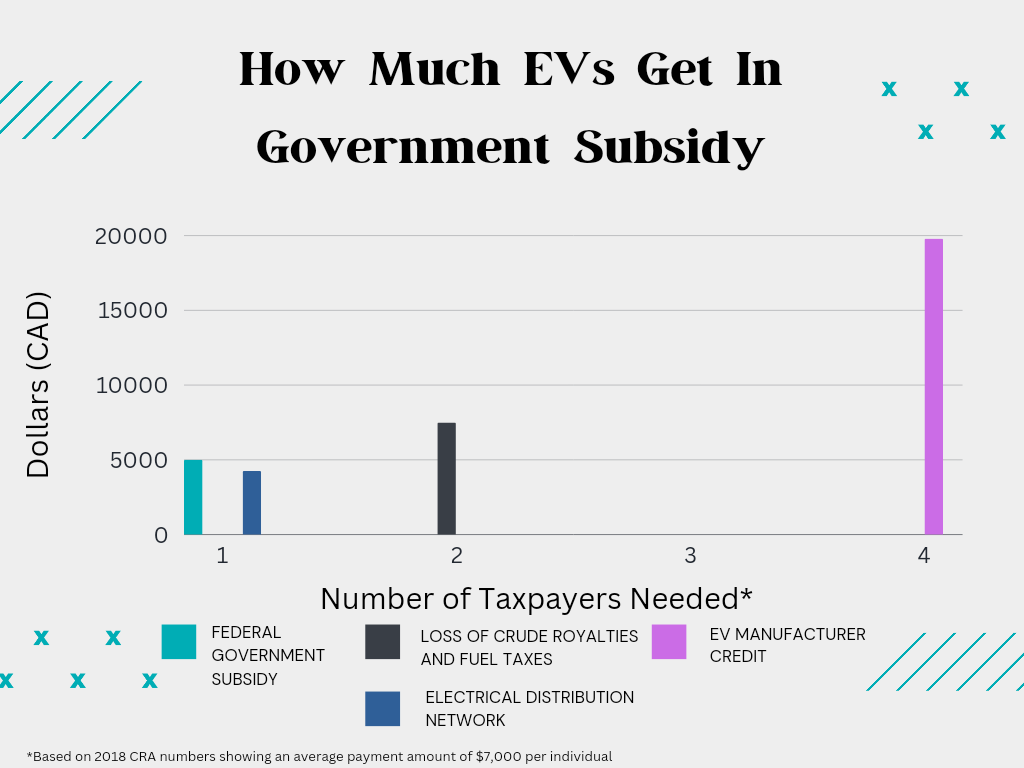
We should all be concerned by how these increased cost burdens mean short-term subsidies, low-interest loans, public transit and financial assistance is spent on a potential environmental impact rather than providing real-world lifestyle improvements for those in most need.
Investment and Savings
The transition to a net-zero will have a profound impact on investment portfolios across the globe. As we embark on the path towards significant change, we expect increased volatility in the stock market.
This is due to industries, whether they be large-scale manufacturing or small local businesses, adjusting and adapting to the new and very expensive market realities, laws, policies and taxes.
This dynamic shift in the market will affect the savings and retirement plans of future generations, diligently working and contributing to these future plans and social security funds.
We should all be concerned by how this increased volatility will undoubtedly bring future challenges such risking our social security net and concept of retirement
Final Note
In analysing the demographic implications, we see that Canadians in their prime working years, are likely to bear a significant portion of these costs, including increased taxes, lower living standards and growing social issues.
Before we continue down this zealous quest to uproot our proven economic model. We encourage you to join us in taking the time to listen to skeptics, examine who is driving this movement, their motivations and incentives. Recognize we still have the power to change course and have both a greener world and an economy that aims to benefit every Canadian.
How You Can Help
Supporting those who are actively involved in pragmatic solutions is crucial, as it bolsters their efforts, amplifies their message, and fosters a stronger, more effective community driving towards meaningful change.
Find inquirers worth supporting.
Staying informed on important topics, such as climate change, enhances our understanding of the world. This empowers us to engage in meaningful conversations and equips us to make informed decisions that can lead to positive change.
Maybe we can help.
Asking questions unlocks a powerful curiosity, helping everyone gain clarity.
Engage with some fellow inquirers.
It's vital we ensure that good people are not silenced, as their voices often bring necessary change, different and ethical perspectives and positive influences that are essential for a just and prosperous society.
Help us hold the line.
Important Climate Questions
Have a different question and can’t find the answer you’re looking for? Reach out to us by sending us an email and we’ll get back to you as soon as we can.
- Do we need to worry about carbon dioxide?
Unlikely, Carbon dioxide is plant food. Calling it 'carbon pollution' is political and not scientifically based.
Learn more- Can we afford the policies proposed by climate alarmists?
No, the costs would be trillions of dollars for Canada to impose current proposals with a possible net-negative environmental effect.
Learn more- Can we forecast climate?
Not accurately, models make assumptions about a complex system so their forecasts remain unreliable at this time.
Learn more- Adaptation, Prosperity, and Environmental Stewardship
Given the uncertainty of climate science and the unsoundest of proposed migrations, it our responsibility to demand accountability.
Learn more- Is anything unusual happening?
Maybe, for although modernity isn't historical the recent climate changes do fall within natural variability.
Learn more- Do most climate experts agree that we face a climate crisis?
Some certainly do, but there remains a wide range of scientific opinion about the causes and consequences of climate change.
Learn more